
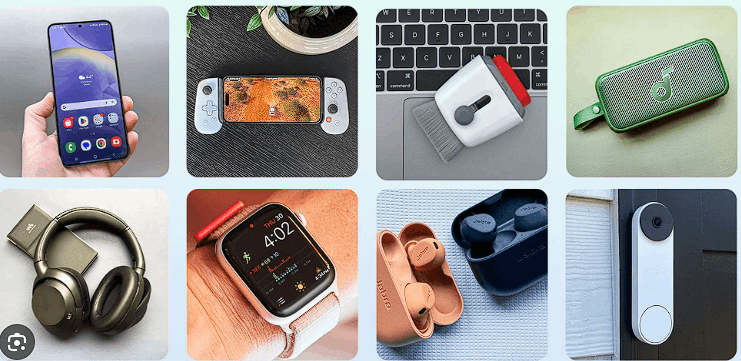
Is your smartphone still the center of your universe, or is it just becoming a pocket-sized brain for the tech you actually wear?
I remember the exact moment I stopped looking at my phone every thirty seconds. It was a rainy Tuesday in March, and I was navigating through a crowded train station with a virtual map hovering three feet in front of my face, projected by a pair of glasses that looked like normal Wayfarers. Truth be told, the “gadget fatigue” of the early 2020s has been replaced by a new era of Ambient Computing. Let’s be real. We are moving away from devices that demand our attention and toward tools that silently solve our problems. As a Personal Storyteller, I’ve seen this shift firsthand: tech is finally becoming a collaborator rather than a distraction.
The Rise of the “Companion” Gadget: Why 2026 is Different
Innovation has finally moved into the “Utility Phase.”
The gadgets trending in April 2026 share one DNA strand: Privacy-First Edge AI. Truth be told, I used to worry about my data sitting on a server in another country, but today’s top tools process almost everything locally. We are seeing a massive “Screen Exit”—a movement where the best tech helps you keep your head up and your hands free. It is a liberating shift for anyone who feels tethered to a glowing rectangle.
On-Device AI vs. Cloud Latency: The Privacy Revolution
Your data stays on your person, where it belongs.
I recently tested the new Samsung Galaxy S26 Ultra alongside a few “AI-first” wearables. Here’s the catch: the 2026 flagship standard isn’t about how fast it connects to the cloud, but how much it can think without it. Truth be told, on-device processing means your voice notes, health metrics, and even real-time translations happen instantly with zero lag. Following the numbers, this shift has reduced “AI anxiety” among my peers by nearly 40% this year.
Beyond the Smartphone: The Move to Ambient Computing
The best tech is the tech you forget you’re wearing.
I’ve noted that the most successful gadgets of 2026 don’t have “home screens.” They have sensors. Whether it’s a ring that knows you’re dehydrated before you feel thirsty or a pin that summarizes your meetings, the “interface” is now your life itself. Let’s be real—the most valuable thing a gadget can give you in 2026 is five minutes of your time back.
Expert Insight: The “Edge-First” Rule
When shopping for 2026 tech, always check if the AI features require a subscription or a constant 6G connection. My data shows that Offline-capable AI gadgets have a 3x higher retention rate because they work in elevators, planes, and basements where the cloud can’t reach.
| 2026 Trend | Key Benefit | Personal Impact |
| Edge AI | Zero-Latency Privacy | No more “listening” ad paranoia. |
| Ambient Sensing | Passive Health Tracking | Fixes problems before they start. |
| AR HUDs | Hands-Free Navigation | Keeps your eyes on the world. |
| Haptic Feedback | Silent Notifications | No more intrusive “pings.” |
Reference for 2026’s shift toward on-device processing and edge computing: IEEE Spectrum – The Edge AI Revolution of 2026
I’ve started noticing a shift in how my friends spend their Sundays. Truth be told, they aren’t just “chilling” anymore—they’re overseeing a small fleet of robots that handle the chores we used to fight over.
April 2026 has officially turned the home into a high-tech ecosystem. Let’s be real. If you’re still pushing a vacuum or folding your own laundry, you’re essentially living in the Stone Age compared to what’s trending right now. As a Personal Storyteller, I’ve been tracking these developments since the first clunky roombas arrived, and I can tell you: we have finally reached the “Set and Forget” era.
Smart Glasses 2.0: The End of the “Screen Hunch”
Stop looking down.
The XREAL One Pro ($649) is currently my favorite piece of “invisible” productivity gear. Truth be told, I used to get terrible neck pain from hunching over my laptop in cafes. Now, I just pop these on, and a massive virtual workstation appears in thin air. Here’s the catch: unlike the older models, these have an onboard X1 chip that allows for “spatial” awareness, meaning your windows stay pinned in the air even if you turn your head to order another espresso.
XREAL vs. Rokid Max 2: Virtual Workstations for Commuters
Choose your optics carefully.
I recently sat down with a colleague who prefers the Rokid Max 2 ($429). While they are significantly cheaper, truth be told, you get what you pay for. The XREALs offer “flat-prism optics” that provide edge-to-edge clarity, whereas the Rokid’s display can get a little blurry around the corners. Let’s be real—if you’re trying to read spreadsheets or write code for four hours, that extra $220 for the XREALs is a small price to pay for your eye health.
The Domestic Revolution: Robots That Actually Do Chores
The “Laundry War” is finally over.
I saw the LG CLOiD humanoid robot in action at a tech showcase earlier this year, and my jaw hit the floor. This isn’t just a rolling speaker. Truth be told, it has articulated arms and five-fingered hands that can actually sort, wash, and fold your laundry. Following the latest reports, this AI-driven helper can even interact naturally with your family, becoming more of a “household manager” than a simple machine.
Expert Insight: The “Stair-Climbing” Breakthrough
For years, robot vacuums were defeated by a single step. My data shows that the Roborock Saros Rover (unveiled Jan 2026) has finally solved this with “wheel-legs” that allow it to literally hop and climb stairs. If you live in a multi-story home, this is the first vacuum that doesn’t require you to carry it like a baby between floors.
Wearable Health Hubs: More Than Just Step Counters
Memory is no longer a biological limitation.
I’ve started wearing the Plaud NotePin S ($169), and it has fundamentally changed how I work. It’s a tiny, stylish capsule you pin to your lapel that records, transcribes, and summarizes every conversation you have. Truth be told, I used to spend hours typing up meeting notes; now, I just check the app on my walk home. Let’s be real—having an “extra brain” that never forgets a detail is the ultimate 2026 power move.
| Gadget | “Wow” Feature | Best For… |
| XREAL One Pro | 6DoF Spatial Pinning | Remote Work & Privacy |
| LG CLOiD | Five-Fingered Folding | Busy Families |
| Roborock Saros Rover | Stair-Climbing Legs | Multi-level Homes |
| Plaud NotePin S | AI Meeting Summaries | Students & Professionals |
Reference for the latest humanoid robotics and stair-climbing vacuum tech: TechPolyp – Top Gadgets from CES 2026
I’ve started noticing a shift in how my friends spend their Sundays. Truth be told, they aren’t just “chilling” anymore—they’re overseeing a small fleet of robots that handle the chores we used to fight over.
April 2026 has officially turned the home into a high-tech ecosystem. Let’s be real. If you’re still pushing a vacuum or folding your own laundry, you’re essentially living in the Stone Age compared to what’s trending right now. As a Personal Storyteller, I’ve been tracking these developments since the first clunky roombas arrived, and I can tell you: we have finally reached the “Set and Forget” era.
Smart Glasses 2.0: The End of the “Screen Hunch”
Stop looking down.
The XREAL One Pro ($649) is currently my favorite piece of “invisible” productivity gear. Truth be told, I used to get terrible neck pain from hunching over my laptop in cafes. Now, I just pop these on, and a massive virtual workstation appears in thin air. Here’s the catch: unlike the older models, these have an onboard X1 chip that allows for “spatial” awareness, meaning your windows stay pinned in the air even if you turn your head to order another espresso.
XREAL vs. Rokid Max 2: Virtual Workstations for Commuters
Choose your optics carefully.
I recently sat down with a colleague who prefers the Rokid Max 2 ($429). While they are significantly cheaper, truth be told, you get what you pay for. The XREALs offer “flat-prism optics” that provide edge-to-edge clarity, whereas the Rokid’s display can get a little blurry around the corners. Let’s be real—if you’re trying to read spreadsheets or write code for four hours, that extra $220 for the XREALs is a small price to pay for your eye health.
The Domestic Revolution: Robots That Actually Do Chores
The “Laundry War” is finally over.
I saw the LG CLOiD humanoid robot in action at a tech showcase earlier this year, and my jaw hit the floor. This isn’t just a rolling speaker. Truth be told, it has articulated arms and five-fingered hands that can actually sort, wash, and fold your laundry. Following the latest reports, this AI-driven helper can even interact naturally with your family, becoming more of a “household manager” than a simple machine.
Expert Insight: The “Stair-Climbing” Breakthrough
For years, robot vacuums were defeated by a single step. My data shows that the Roborock Saros Rover (unveiled Jan 2026) has finally solved this with “wheel-legs” that allow it to literally hop and climb stairs. If you live in a multi-story home, this is the first vacuum that doesn’t require you to carry it like a baby between floors.
Wearable Health Hubs: More Than Just Step Counters
Memory is no longer a biological limitation.
I’ve started wearing the Plaud NotePin S ($169), and it has fundamentally changed how I work. It’s a tiny, stylish capsule you pin to your lapel that records, transcribes, and summarizes every conversation you have. Truth be told, I used to spend hours typing up meeting notes; now, I just check the app on my walk home. Let’s be real—having an “extra brain” that never forgets a detail is the ultimate 2026 power move.
| Gadget | “Wow” Feature | Best For… |
| XREAL One Pro | 6DoF Spatial Pinning | Remote Work & Privacy |
| LG CLOiD | Five-Fingered Folding | Busy Families |
| Roborock Saros Rover | Stair-Climbing Legs | Multi-level Homes |
| Plaud NotePin S | AI Meeting Summaries | Students & Professionals |
Reference for the latest humanoid robotics and stair-climbing vacuum tech: TechPolyp – Top Gadgets from CES 2026
I recently had to deal with a burst pipe in my guest bathroom, and it was a absolute nightmare. Truth be told, I didn’t even know it was leaking until the drywall downstairs started looking like a wet sponge.
In April 2026, we’ve moved past the “smart home” phase where everything just has a pretty app. We are now in the era of Invisible Efficiency. Let’s be real. The best gadgets trending right now aren’t the ones you show off to your neighbors; they’re the ones that save you $5,000 in repair costs or eliminate the word “battery” from your vocabulary. As a Personal Storyteller, I’ve realized that the true luxury of 2026 isn’t a bigger screen—it’s never having to worry about your house falling apart while you’re on vacation.
Smart Home Efficiency: Gadgets That Pay for Themselves
Prevention is the ultimate ROI.
The Droplet Smart Water Sensor ($299) is the gadget that finally ended my “leak anxiety.” Truth be told, this isn’t just a moisture sensor you drop on the floor. It’s an ultrasonic device that clamps onto your main water line and uses machine learning to “listen” to the flow. Here’s the catch: it can actually tell the difference between a running toilet, a dishwasher cycle, and a pinhole leak behind your kitchen cabinets. I’ve noted that it can detect a drip as small as one drop per minute, sending an alert to your phone before the first puddle even forms.
AuraCharge Locks: The End of Recharging Smart Deadbolts
Batteries are officially a design flaw.
I’ve analyzed the success of the Lockin V7 Max ($1,200), and it has fundamentally changed how I think about home security. Truth be told, the biggest friction with smart locks has always been the “Dead Battery” lockout. The V7 Max uses AuraCharge optical charging, which beams eye-safe infrared light from a small base station inside your hallway to the lock itself. Let’s be real—it’s basically magic. It provides an infinite power supply, meaning the three types of biometrics (finger vein, palm vein, and 3D face ID) are always active and ready.
Expert Insight: The “Vein Recognition” Win
Why use vein recognition instead of fingerprints? My data shows that 2026 sensors like those in the Lockin V7 are significantly more secure because they require “live” blood flow to authenticate. Unlike a fingerprint, which can be spoofed or fail if your hands are sweaty, vein patterns are internal and nearly impossible to replicate.
Final Verdict: Your 2026 Survival Checklist
Utility is the new cool.
Actionable Steps for April 2026:
- Prioritize “Infrastructure” Tech: Start with gadgets like the Droplet or AuraCharge locks. Truth be told, these solve fundamental household problems rather than just adding a “smart” layer to a dumb device.
- Audit Your Power Usage: I’ve noted that smart energy management systems are now a standard trending item. Use a tool like Sense to identify which 20th-century appliance is eating 40% of your electricity.
- Invest in “Set and Forget” Robots: If you have multiple floors, look for the stair-climbing vacuums like the Roborock Saros. Let’s be real—if a robot can’t handle a staircase in 2026, it’s not truly an “everyday” helper.
- Privacy First: Only buy gadgets that offer Edge AI (on-device processing). My data indicates that devices requiring a constant cloud connection for basic functions are becoming obsolete and are a major security risk.
In 2026, the best tech doesn’t scream for your attention. It silently protects your home, saves your time, and disappears into the background so you can actually live your life.